Give Grade 3 students repeated practice with reading comprehension, inference, text evidence, and logical reasoning through 10 everyday mystery passages.
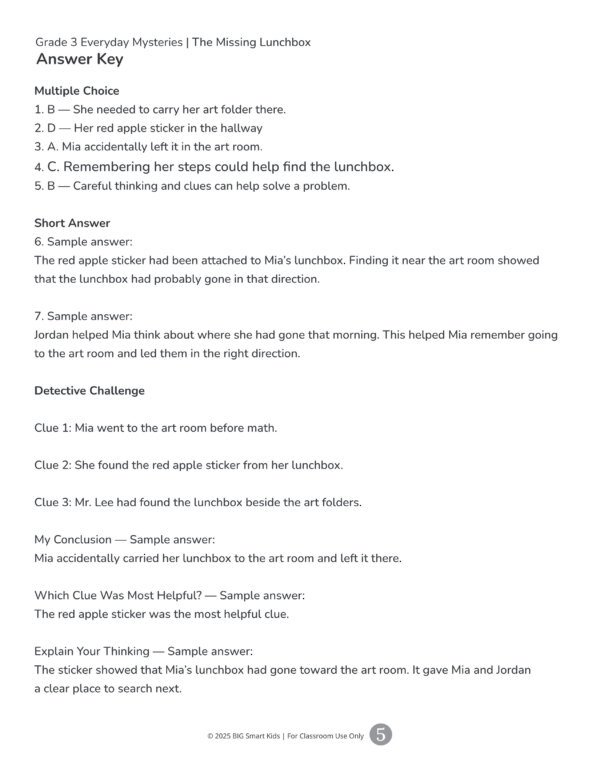
Students read each mystery, identify clues, answer comprehension questions, follow evidence, draw a conclusion, and explain which clue was most useful.
This 50-page reading resource includes 10 complete mystery sets with answer keys.
Full Description
Build Reading Comprehension Through Everyday Mysteries
This Grade 3 reading resource turns comprehension practice into a series of short mystery-solving challenges.
Each passage presents an unusual but realistic situation. Students must read carefully, notice important details, compare clues, make an inference, and determine the most reasonable explanation.
The mystery format gives students a reason to return to the text and use evidence rather than relying on guesses.
Read Closely and Follow the Evidence
Each story introduces a problem that can be solved by connecting details from the passage.
Students investigate situations such as:
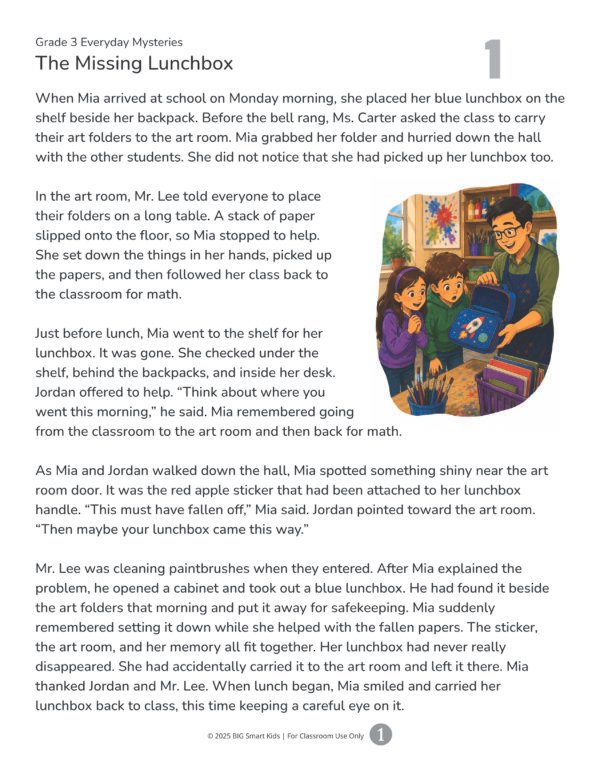
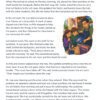
- A missing lunchbox
- Muddy footprints by a classroom window
- A bird feeder that keeps becoming empty
- A library book that disappears
- A strange noise in a storage room
- A wet backpack
- A knocked-over flowerpot
- A missing class pet
- A mystery package
- Lights turning on in an empty classroom
The clues are built into the story so students must decide which details matter most.
Practice Core Reading Comprehension Skills
After each passage, students answer multiple-choice and short-answer questions.
The activities provide practice with:
- Key details
- Main idea and lesson
- Cause and effect
- Sequence of events
- Making inferences
- Drawing conclusions
- Character actions
- Text evidence
- Logical reasoning
Students also explain answers in writing, helping them move beyond simply selecting an option.
Use Clues to Solve Each Mystery
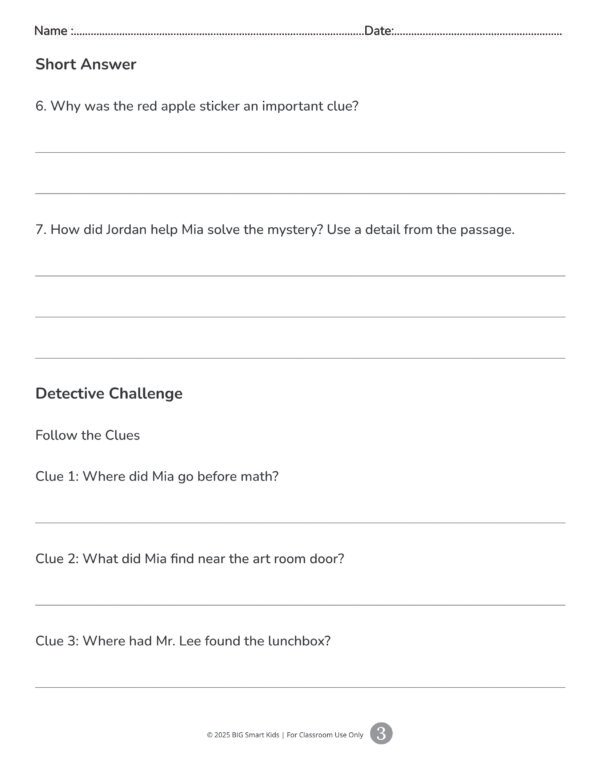
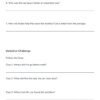
Each story includes a Detective Challenge.
Students return to the passage and identify several clues that contribute to the solution.
This encourages them to think about how evidence works together instead of focusing on one isolated sentence.
Draw a Conclusion From the Text
After collecting the clues, students answer the central mystery question.
They then identify:
- What most likely happened
- Which clue was most useful
- Why that clue helped solve the mystery
This repeated routine supports inference, evidence-based thinking, and written explanation.
Develop Critical Thinking Through Reading
The stories frequently begin with a reasonable first guess that later changes when new evidence appears.
Students practice thinking through questions such as:
- Does the first explanation fit every clue?
- What detail changes the original idea?
- Which evidence is strongest?
- What explanation best fits all the information?
- How can I justify my conclusion?
This makes the resource useful for both reading comprehension and critical-thinking practice.
What Students Practice
- Reading comprehension
- Close reading
- Key details
- Main idea and lesson
- Cause and effect
- Sequencing
- Inference
- Text evidence
- Drawing conclusions
- Clue analysis
- Logical reasoning
- Critical thinking
- Short-answer responses
- Explaining thinking
What’s Included
- 10 Everyday Mystery Reading Passages
- Multiple-Choice Questions
- Short-Answer Questions
- Detective Challenge Activities
- Follow-the-Clues Sections
- Conclusion Questions
- Most-Helpful-Clue Analysis
- Explain-Your-Thinking Prompts
- Complete Answer Keys
Mystery Passages Included
- The Missing Lunchbox
- The Footprints by the Classroom Window
- The Mystery of the Empty Bird Feeder
- The Library Book That Disappeared
- The Strange Noise in the Storage Room
- The Case of the Wet Backpack
- Who Knocked Over the Flowerpot?
- The Missing Class Pet
- The Mystery Package
- The Lights in the Empty Classroom
Best Uses for This Resource
This resource can work well for:
- Grade 3 reading comprehension
- Inference practice
- Text-evidence lessons
- Close reading
- Critical-thinking activities
- Small-group reading
- Independent practice
- Literacy centers
- Morning work
- Homework
- Early finishers
- Review
- Substitute plans
Resource Details
Grade: 3
Subject: Reading / ELA
Resource Type: Mystery Reading Comprehension Worksheets
Focus Skills: Inference, Text Evidence, Conclusions, Critical Thinking
Length: 50 pages
Includes: 10 Mystery Passages, Student Activities, and Answer Keys