
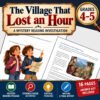
The Village That Lost an Hour | Grades 4–5 Mystery Reading Comprehension
$3.45
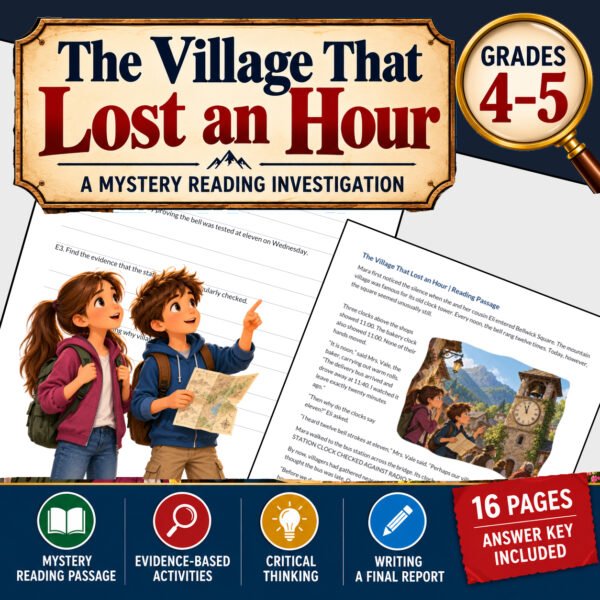
Engage Grades 4–5 students in an exciting mystery reading investigation! This 16-page printable resource follows two young detectives as they uncover clues about a village where the clocks appear to have stopped. Students practice reading comprehension, vocabulary, text evidence, sequencing, cause and effect, and critical thinking through an illustrated fiction passage, case documents, and a final evidence-based report. Includes a teacher guide, printable activities, and complete answer keys.
Description
Can an entire village really lose an hour?
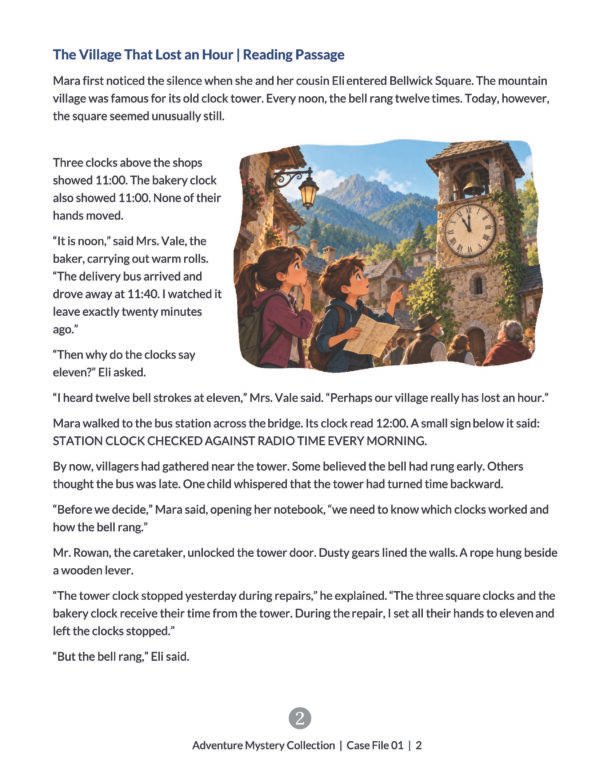
When Mara and Eli arrive in the mountain village of Bellwick, they discover that several clocks are frozen at eleven, even though the station clock shows noon. The tower bell has rung twelve times, and the villagers are convinced something strange has happened. Can the young investigators uncover the truth?
The Village That Lost an Hour is a 16-page mystery reading comprehension resource for Grades 4–5. Students become evidence-based investigators as they examine an illustrated fiction passage, a repair log, a timeline, and witness statements before explaining the mystery in a final case report.
Designed for classroom instruction, small-group investigations, independent reading practice, and homeschool learning, this printable PDF combines literacy skills with critical thinking and written reasoning.
What Students Will Learn
- Identify key details and make inferences supported by the text
- Use textual evidence to answer comprehension questions
- Determine vocabulary meaning from context
- Sequence events and calculate elapsed time
- Distinguish observations, interpretations, and written records
- Recognize cause-and-effect relationships
- Evaluate competing explanations using evidence
- Write a clear claim supported by two different clues and reasoning
What’s Included
This 16-page printable resource includes:
- 1-page teacher guide with lesson sequence and assessment guidance
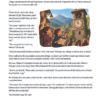
- 2-page illustrated mystery reading passage
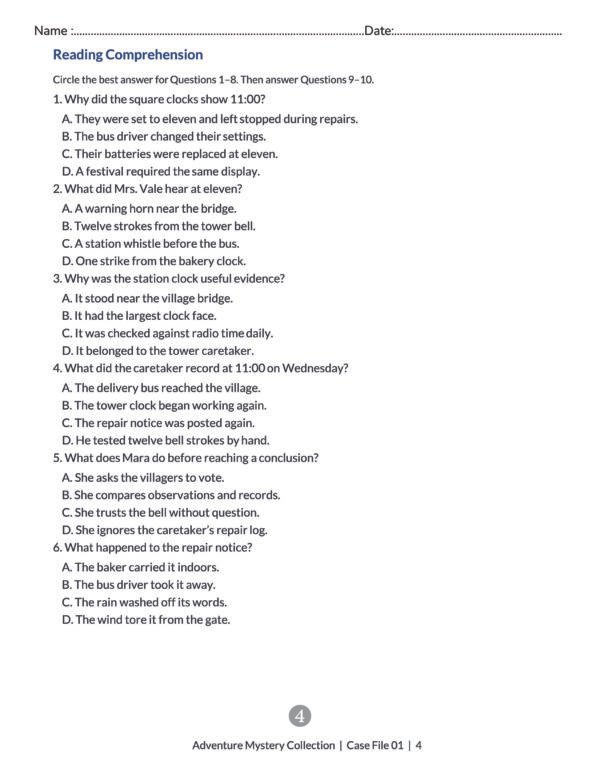
- 2 pages of reading comprehension questions
- 1 page of vocabulary-in-context questions
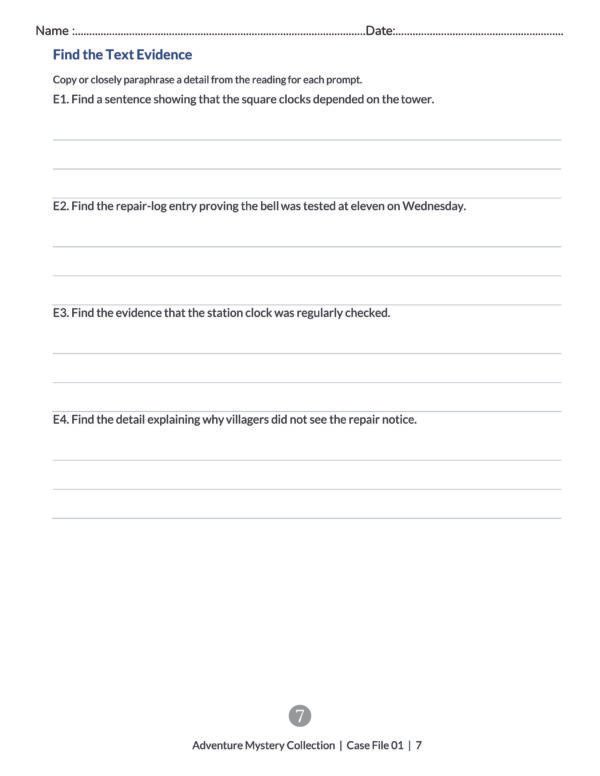
- 1 page of text evidence activities
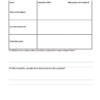
- 2 case-document pages featuring a timeline and evidence comparison
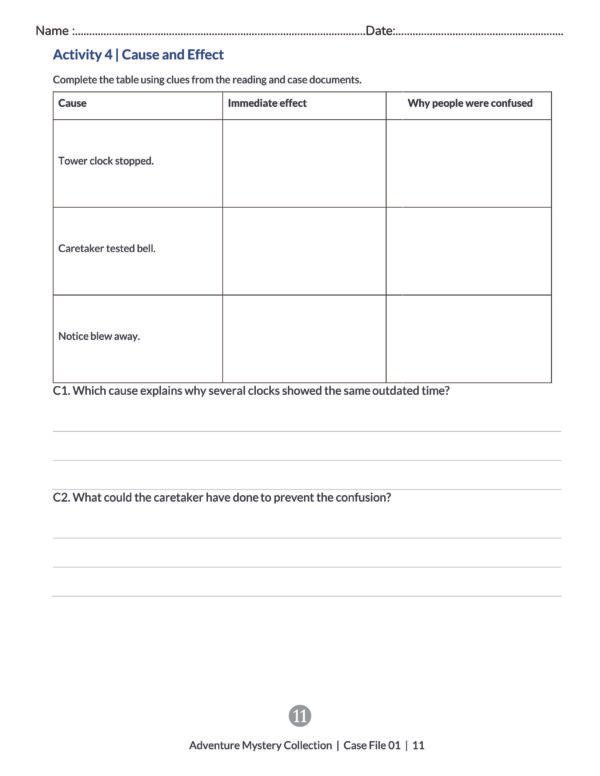
- 3 additional investigation worksheets covering witness statements, cause and effect, and competing theories
- 1 final case report worksheet
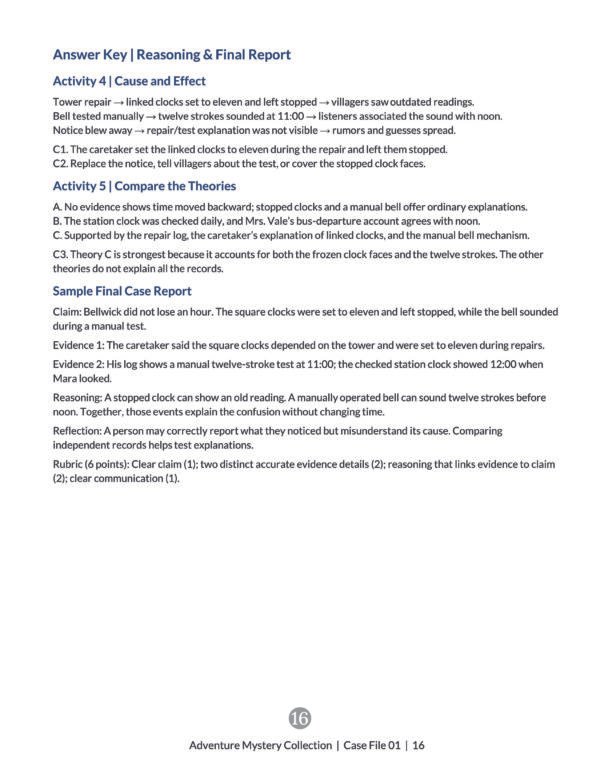
- 3 pages of answer keys, sample responses, and a six-point assessment rubric
Mystery Investigation Activities
- Read the Mystery: Discover the unexplained events in Bellwick.
- Reading Comprehension: Answer multiple-choice and written-response questions.
- Vocabulary in Context: Examine important words from the passage.
- Find the Text Evidence: Identify details and records that support conclusions.
- Rebuild the Timeline: Put events in order and calculate elapsed time.
- Compare the Evidence: Examine the clock readings, bell, and bus record.
- Analyze Witness Statements: Distinguish observations, interpretations, and records.
- Cause and Effect: Explain how events contributed to the confusion.
- Compare the Theories: Evaluate explanations using specific clues.
- Final Case Report: Write a claim, provide two different pieces of evidence, and explain the reasoning.
Common Core State Standards (CCSS)
These activities support practice related to the following Grade 4 and Grade 5 English Language Arts standards:
- RL.4.1 – Refer to details and examples when explaining explicit information and drawing inferences from a text.
- RL.5.1 – Quote accurately from a text when explaining explicit information and drawing inferences.
- W.4.8 – Gather relevant information and organize text evidence; this resource practices some elements of this standard.
- W.5.8 – Recall relevant information and summarize or paraphrase information in notes and finished work; this resource practices some elements of this standard.
- L.4.4 – Determine or clarify the meaning of unknown and multiple-meaning words and phrases.
- L.5.4 – Determine or clarify the meaning of unknown and multiple-meaning words and phrases.
Standards connections identify skills practiced in this resource. The activities do not assess every component of the listed standards.
How to Use This Resource
For Classroom Teachers
Use the investigation over 2–3 lessons of approximately 35–45 minutes each. Begin with the mystery passage and comprehension questions, continue with timeline and evidence analysis, and finish with the written case report. The included teacher guide and answer keys support planning and assessment.
For Homeschool Families
Read the mystery together, discuss possible explanations, and guide students through the investigation worksheets. Encourage students to explain which evidence supports their conclusions.
For Independent Practice
Students can work through the reading, questions, and investigation tasks independently, then use the final case report to organize their conclusions.
Why Choose This Resource?
- Combines engaging mystery fiction with reading comprehension practice
- Encourages students to investigate rather than simply recall answers
- Integrates text evidence, vocabulary, chronology, and critical thinking
- Includes realistic case documents and witness statements
- Builds evidence-based writing and reasoning skills
- Provides complete answer keys, sample responses, and assessment guidance
Preview This Resource
Explore the mystery reading passage, investigation worksheets, case documents, and teacher materials before purchasing.
Please Note: The preview is watermarked for viewing purposes. The purchased downloadable PDF contains the same educational content without preview watermarks.
Resource Details
- Grade Level: Grades 4–5
- Subject: English Language Arts, Reading Comprehension, Critical Thinking
- Resource Type: Mystery Reading Passage, Worksheets, Investigation Activities
- Total Pages: 16
- Reading Passage: 2 pages
- Student Pages: 12 (pages 2–13)
- Answer Key: 3 pages (pages 14–16)
- Teacher Guide: Included (page 1)
- Format: Printable PDF
- Suggested Duration: 2–3 lessons of 35–45 minutes